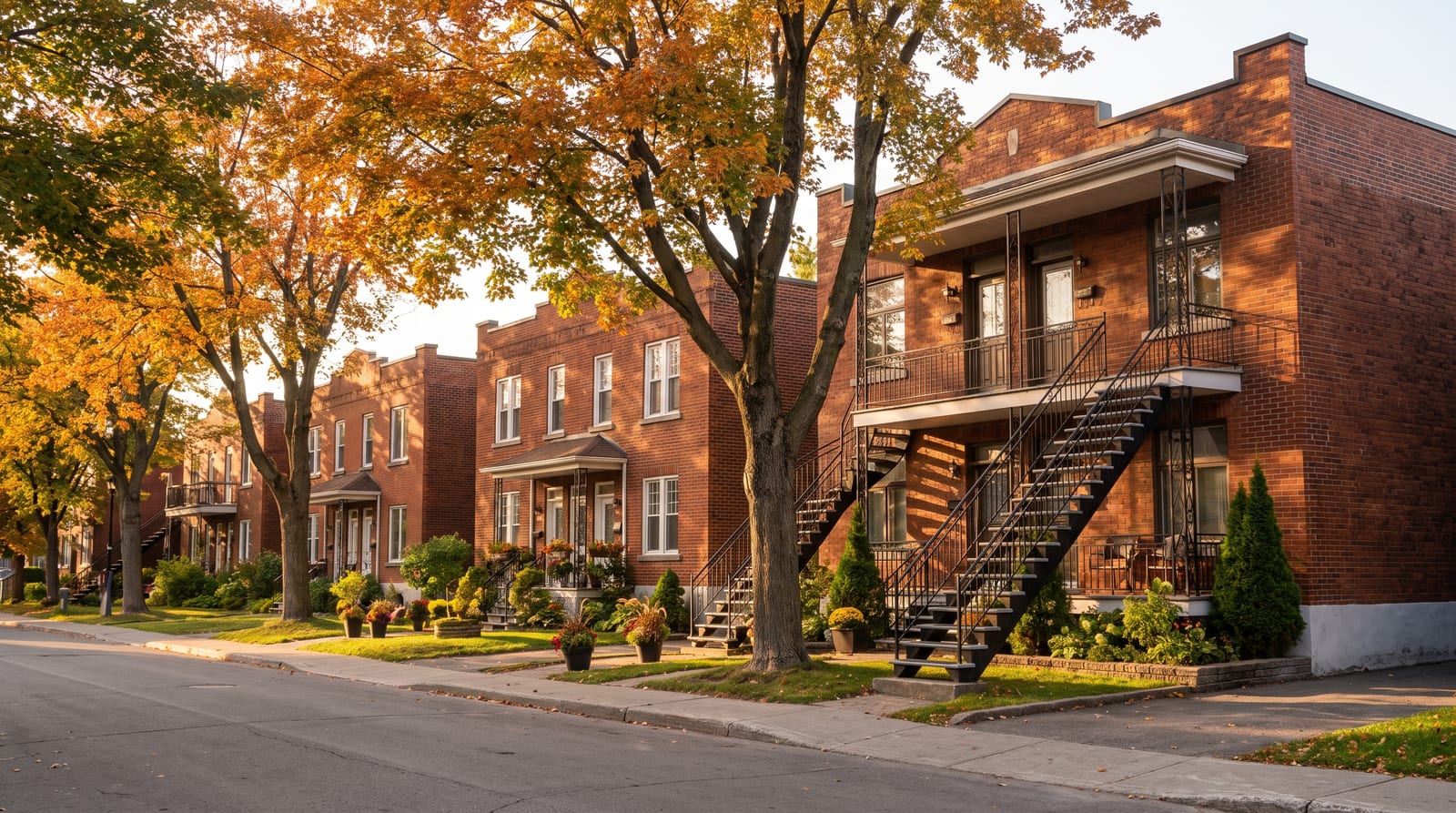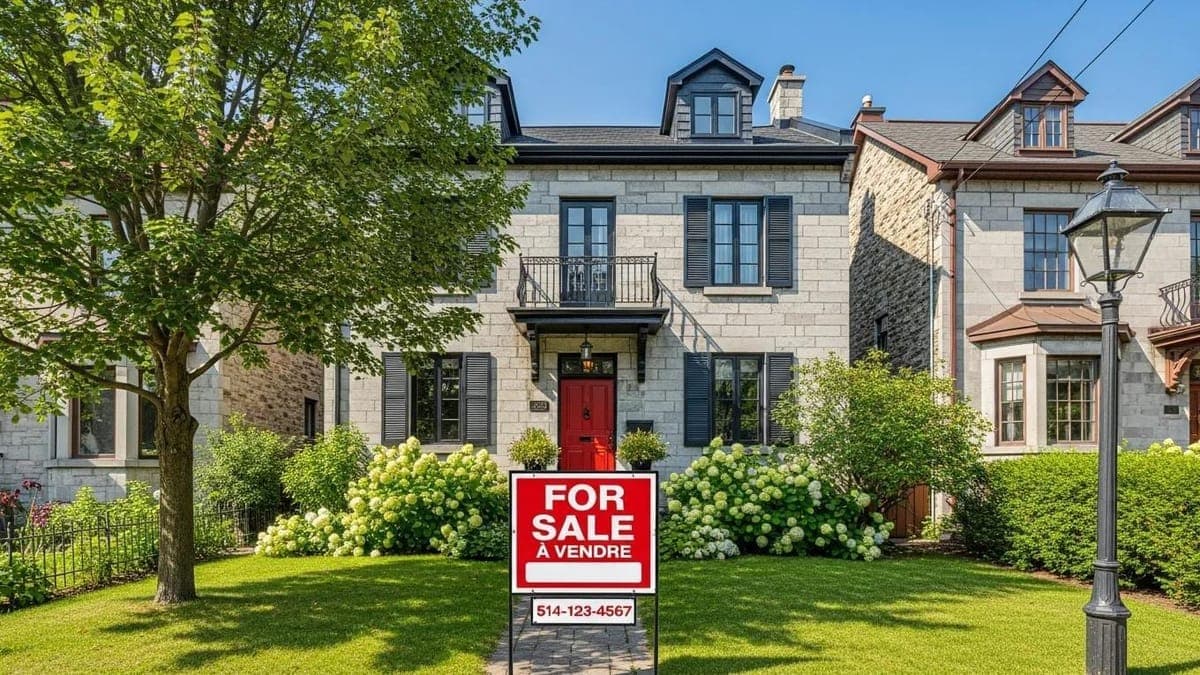
Selling a home in Montreal takes more than a sign on the lawn and an online listing. In a market that remains competitive, every decision, from choosing your broker to your negotiation strategy, directly shapes the final price you get. This guide walks through the steps that make a difference: choosing the right real estate broker, structuring the marketing plan, pricing the property accurately, and negotiating firmly all the way to closing.
Key takeaways
- Selling a home in Montreal requires a strategy that combines the right broker with an effective marketing plan.
- An experienced broker knows the local market and optimizes the sale price through negotiation skills.
- Home staging and professional photography increase the perceived appeal of the property.
- An accurate valuation based on comparable sales avoids overpricing or underpricing.
- Rigorous negotiation led by a broker maximizes the final sale price.
- A strong broker network gives access to potential buyers even before the property hits the market.
- Tracking market trends allows you to adjust your selling strategy in real time.
- Preparing legal documents and inspections in advance builds buyer confidence.
Choosing the right broker

Choosing a skilled real estate broker is decisive for a successful sale. A good broker has deep knowledge of the local market and negotiation skills that can tip the balance in your favour. Brokers experienced across Montreal's neighbourhoods provide accurate price analysis and guide sellers toward effective strategies.
With more than 650 completed transactions in Montreal since 2018, an expert Montreal real estate broker brings deep neighbourhood knowledge, spanning residential resale to new construction.
Strategic marketing
To sell a home effectively, a strategic marketing plan is essential. That includes presenting the property in an attractive, professional way to draw in potential buyers.
Key elements of an effective marketing plan:
- Home staging: a polished presentation of the home directly shapes buyers' first impression.
- Professional photography: quality images attract more attention and spark interest during showings.
- Pricing strategy: setting a competitive price is crucial to attract buyers in a constantly shifting market.
Working with a broker gives you access to home staging and photography services that will strengthen your property's appeal on the market.
Property valuation

Valuing your property plays a central role in the sale process. A sound valuation relies on a comparable analysis of recent sales and a solid understanding of market trends.
An accurate valuation helps avoid common mistakes like overpricing or underpricing, both of which hurt how buyers perceive the property. The right price attracts buyers quickly, while an inappropriate price extends time on the market and can raise doubts about the property's true value.
Three pricing strategies: pros and cons
| Strategy | Pros | Cons |
|---|---|---|
| Overpricing | Leaves apparent room for negotiation | Slows down showings, stalls the property, can suggest a hidden problem |
| Fair valuation | Attracts serious buyers quickly, creates competition among buyers, shortens time to sell | Requires rigorous comparable analysis, leaves little room to negotiate down |
| Underpricing | Can generate multiple simultaneous offers, speeds up the sale | Risks selling below true value, can hurt perception of the property |
Prices vary considerably from one Montreal neighbourhood to the next. Rather than relying on general averages, the best approach remains an analysis of recent comparable sales in your specific area, carried out by a broker who knows the local dynamics.
Rigorous negotiation
Negotiation is consistently the moment where both parties' interests are at stake. A broker's skill in this area can make a significant difference to the final outcome.
A savvy broker carefully prepares offers, defends the seller's interests, and works to maximize the sale price. The best negotiations turn an offer into an agreement while accounting for both parties' needs.
"The right price is not a guess. It is calculated from concrete data, and it is defended at the negotiating table." Alexia Soudin, residential real estate broker in Montreal
Access to potential buyers
A good real estate broker has a strong network that gives access to potential buyers even before a property hits the market. That can make all the difference in an environment where competition remains strong.
- Networking advantages: a well-connected broker maintains relationships with potential buyers, investors, and other brokers.
- Access to pre-market buyers: presenting your home to these buyers before its formal listing offers a significant advantage.
- Competitive showings: this helps establish a fair value and healthy competition around the property.
Market monitoring
Tracking real estate market trends is essential at every stage of a sale. It allows the strategy to be adjusted as demand shifts. A good broker keeps clients informed of significant changes that could affect the sale, neighbourhood by neighbourhood.
Median single-family home price by sector
Prices vary sharply from one Montreal sector to the next, and not only from year to year. Here is the median price for single-family homes across seven sectors of the island, with the 12-month change and the cumulative 5-year growth.
| Sector | Median price (trailing 12 months) | 12-month change | 5-year growth |
|---|---|---|---|
| Outremont, Westmount, Mont-Royal, Hampstead | $1,995,000 | +5% | +4% |
| Plateau-Mont-Royal | $1,375,000 | +13% | +13% |
| Côte-des-Neiges, Côte-Saint-Luc | $1,075,000 | +14% | +22% |
| Rosemont–La Petite-Patrie | $1,072,000 | +6% | +49% |
| Le Sud-Ouest, Verdun | $980,000 | +17% | +28% |
| Villeray–Saint-Michel–Parc-Extension | $715,000 | +8% | +28% |
| Mercier–Hochelaga-Maisonneuve | $625,000 | +4% | +28% |
Source: APCIQ Residential Barometer, First Quarter 2026, single-family homes, trailing 12-month median price and cumulative 5-year growth, by Centris System sector.
These figures confirm why an accurate local valuation matters more than a general estimate: the same type of property can be worth several hundred thousand dollars more or less depending on the sector, and some sectors like Rosemont–La Petite-Patrie have seen far above-average 5-year growth.
Why knowing the average time to sell matters
Understanding the average selling time in your neighbourhood helps you plan your strategy better. A short selling time generally signals a dynamic market, while a longer one may point to a need to adjust strategy or price.
How to analyze the local Montreal real estate market
Analyzing the local market means reviewing recent listings, trend reports, and comparable sales in your area. This allows you to position your property effectively against the competition.
How to prepare your home to maximize its value
Preparing your home for sale comes down to targeted improvements. A few key steps to consider:
- Dust and clean: a clean home is immediately more appealing.
- Fix imperfections: small repairs can make a big difference in how buyers perceive the home.
- Depersonalize the space: let potential buyers picture themselves living in your home.
The broker's role in optimizing price
The broker plays a central role, bringing expertise to marketing, property valuation, and negotiation. They also have the tools needed to analyze the market and build tailored strategies that maximize the final sale price.
How to choose the best broker to sell in Montreal
Choosing the right broker comes down to clear criteria:
- Experience in your area: a broker who knows your neighbourhood better understands local market prices.
- Reputation: past clients' reviews give a concrete sense of prior successes.
- Communication skills: an actively communicative broker keeps every party informed throughout the process.
What skills to look for in a broker who specializes in homes
- Strong professional qualifications: certifications and specialized training, including an OACIQ licence.
- Negotiation skills: the ability to secure the best possible price for clients.
- Established network: contacts that concretely facilitate the sale.
Negotiation and valuation: two inseparable skills
An effective broker knows how to handle the nuances of negotiation to satisfy both parties' requirements, while keeping their client's interests as the top priority. That support is invaluable in the often stressful dynamics of a real estate sale.
Documents and steps to prepare for a successful sale
It is essential to gather the documents needed to sell a home:
- The property title
- A recent property valuation
- The required property inspections under current regulations
Preparing these documents in advance provides transparency that builds buyer confidence.
What inspections are mandatory for a sale
Certain environmental and structural inspections must be provided before a sale to reassure potential buyers. These findings can also influence the property's final price.
What legal documents are needed to finalize the sale
The required legal documents include the sale contract along with all relevant local regulations. Working with a professional broker makes access to these documents easier and the process less stressful.
Frequently asked questions from Montreal sellers
A few questions come up often among sellers:
- What is the best time to sell?
- Should I renovate before selling?
- What are the hidden costs tied to a sale?
These questions underline the importance of preparing well before putting your home on the market.
How to set the sale price of your home in Montreal
Setting the price requires a careful analysis of several factors: the local valuation, the property's condition, and current market trends.
- Review of similar properties: analyze recent sales in your neighbourhood.
- Appeal factors: consider your home's overall condition and strengths.
- Broker expertise: rely on their experience to determine the best pricing practices.
Average time to sell by neighbourhood
The average time to sell varies considerably from one neighbourhood to another. In general, properties in high-demand areas sell faster than those in less sought-after areas. It remains essential to set expectations based on real, up-to-date sales data rather than general averages.
These elements will help you prepare to sell your home in Montreal the right way, maximizing your sale price and making the whole process easier with the support of a qualified broker.
Conclusion
Optimizing the sale price of your home in Montreal helps attract serious buyers while maximizing your return. Working with a skilled real estate broker makes this process easier through local expertise and proven strategies. By planning each step carefully, you can navigate a competitive real estate market successfully. To discuss your selling project, contact Alexia Soudin today.